Thessalonika, Greece
I’m taking you to Thessaloniki, Greece’s second-largest city — layered with Roman ruins, Byzantine churches, Jewish history, and modern-day contradictions.
The Train from Athens: What No One Shows You
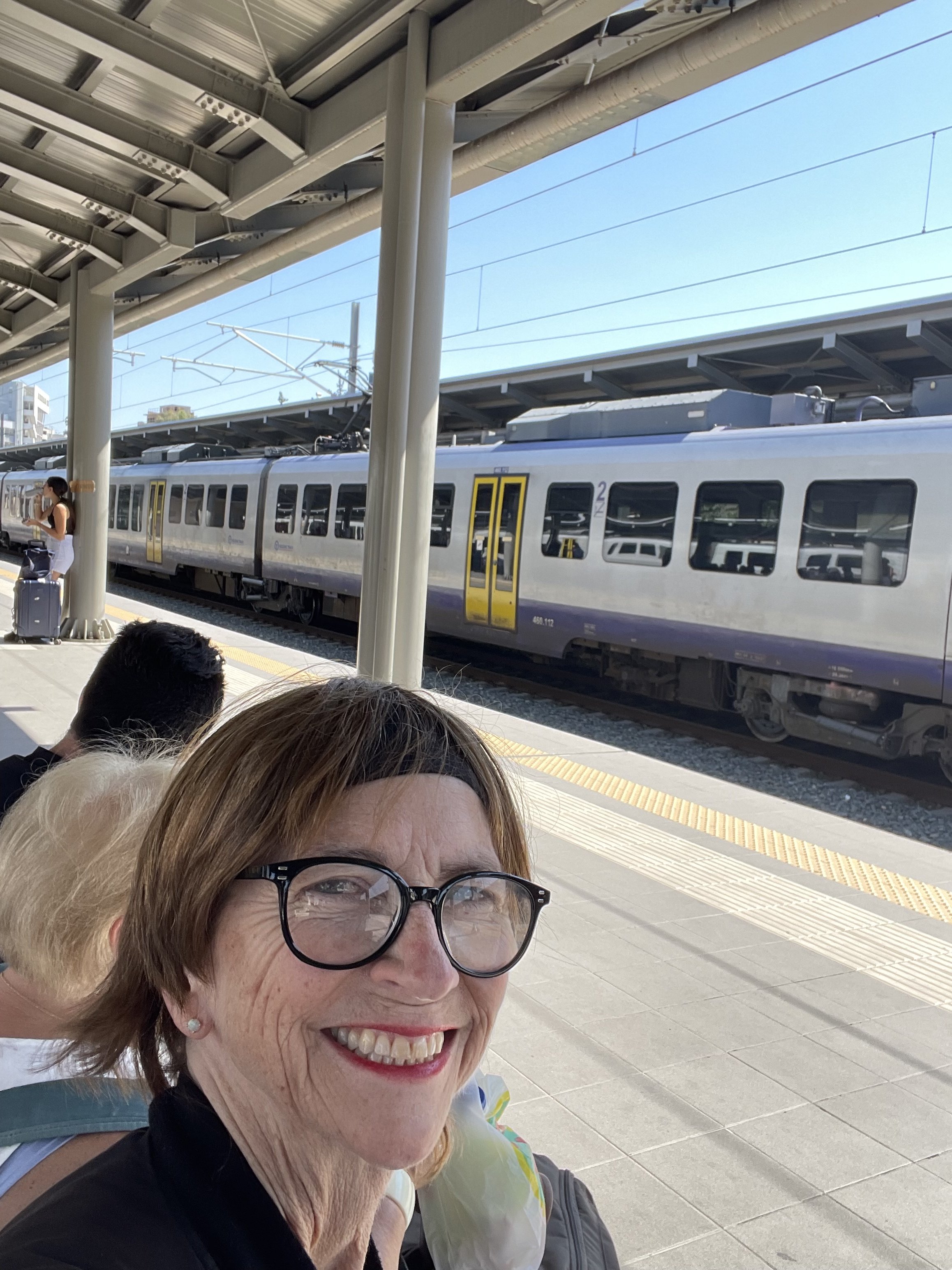
Athens Station Regional sits across from the metro, and honestly The outside feels neglected. Graffiti. Sparse energy. It’s hot — 95 degrees at peak — and I bought two large water bottles plus my refillable container. A good reminder: hydrate first, analyze later. The train stations along the way felt desolate. No WiFi. Few signs of life. A year ago, there was a tragic train accident in Greece — still in people’s minds. You feel it in the quiet.
From the train window, what did I experience? Out the window: farms, tractors, cows. Olives. Grapes. Hay fields. Solar panels on rural homes. Mountains hugging Athens in the distance.
You will pass history, including both Olympia and Meteora, but your train just keeps moving. Sometimes, Step 5 travel is simply witnessing.
Zeus Is Loose (And So Was the Address)
My hostel was called “Zeus Is Loose”. Except that the address was wrong. It was next door. An elderly woman answered at the first address and didn’t speak English. This is where patience becomes your currency.
The hostel was seven stories tall. View over a busy plaza. Elevator worked — thank goodness.
That night, I listened to bouzouki music. A small Greek string instrument. Sad songs. Emotional. Storytelling through melody.
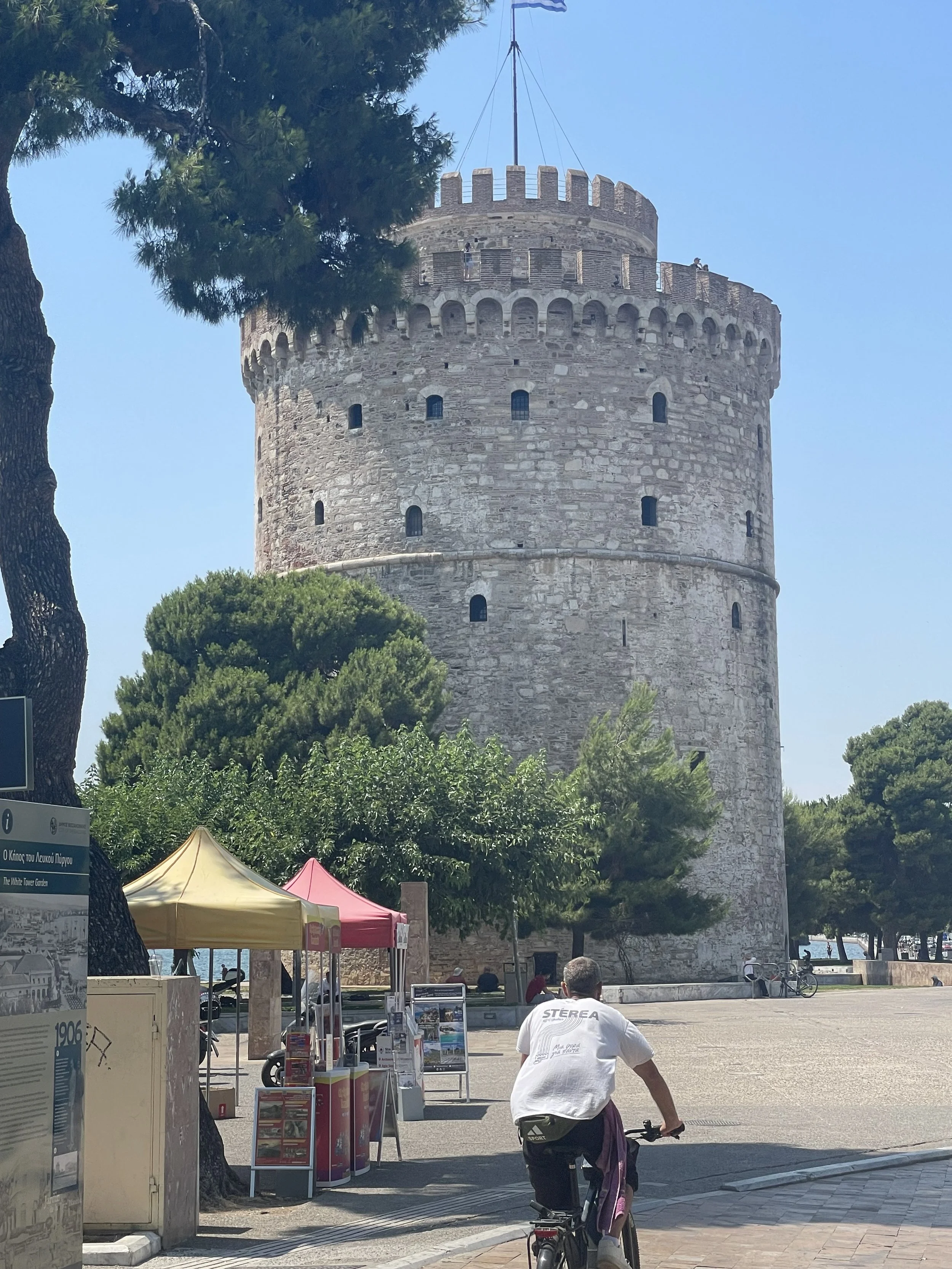
The White Tower
A City Built in Layers
Thessaloniki is vertical, hills rising, red roofs uphill, white below. Homes attached to castle walls. Churches are lower than the street level because earthquakes and centuries of sediment have raised the city about nine meters since the 5th century.
The White Tower is a local landmark. And eight stories tall — stands by the sea. From higher viewpoints, you see it in context: circular, strong, solitary. It’s a good point of reference if you get lost.
Agora means marketplace. Public square. Politics. Theatre. Drama. In the 6th century, men performed. Women were not allowed on stage.
Today? Women lead tours. Women travel solo. Women dance.
Progress, yes. But not perfection.
What I Learned from Locals
Average salaries are low; home ownership is difficult.
Airbnb pressures long-term housing.
Sunday is for church and family — most stores close.
Three soccer teams compete fiercely here (one in a yellow stadium).
Decisions move slowly. Construction moves slowly. Excavations slow everything.
Fire remains a danger — arson and dry heat are concerns.
I was the only American in a group of 25 on the three-hour evening tour. That matters. It changes conversations.
I met two Israeli sisters, 69 and 70, who had planned a one-week trip to Greece.
Airspace closures were extended it to a month. They adjusted. Hiked. Stayed strong. Flexibility is not optional in Step 5 travel. They were amazing friends whom I met along the way.
Would you have stayed? And most importantly:
Ask yourself, Do you belong here?
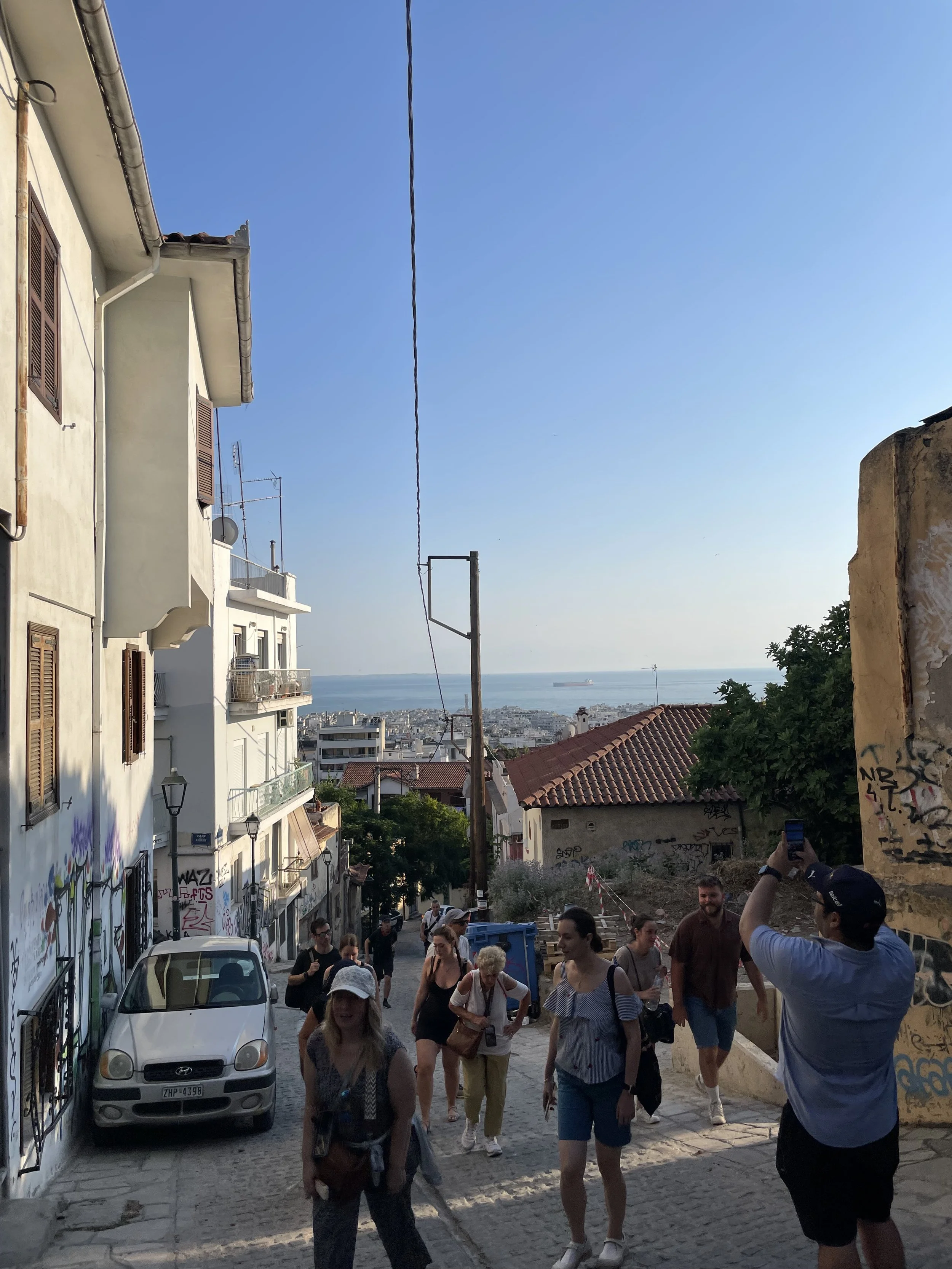
Even if you are the only American in the group.
Even if you feel wrinkled in the heat.
Even if you look tired halfway through your journey.
Step 5 travel means you are strong enough to hold both beauty and discomfort at once.
Thessaloniki will not perform for you. But if you slow down and listen, she will teach you.
Here is my plan, to help Help women travel bravely — and wisely.
Friday morning, I took the metro to the end of the line. It stopped. I went back. Stopped again in Fleming. Eventually, I reached the sea.
The bus systems don’t work all of the time, One time I waited a long time and the driver never came back. but the subways were great. They were new and very clean.
What did I discover? I took some walks and here’s what I found:
Rowing clubs. Children learning to sail. No swimming.
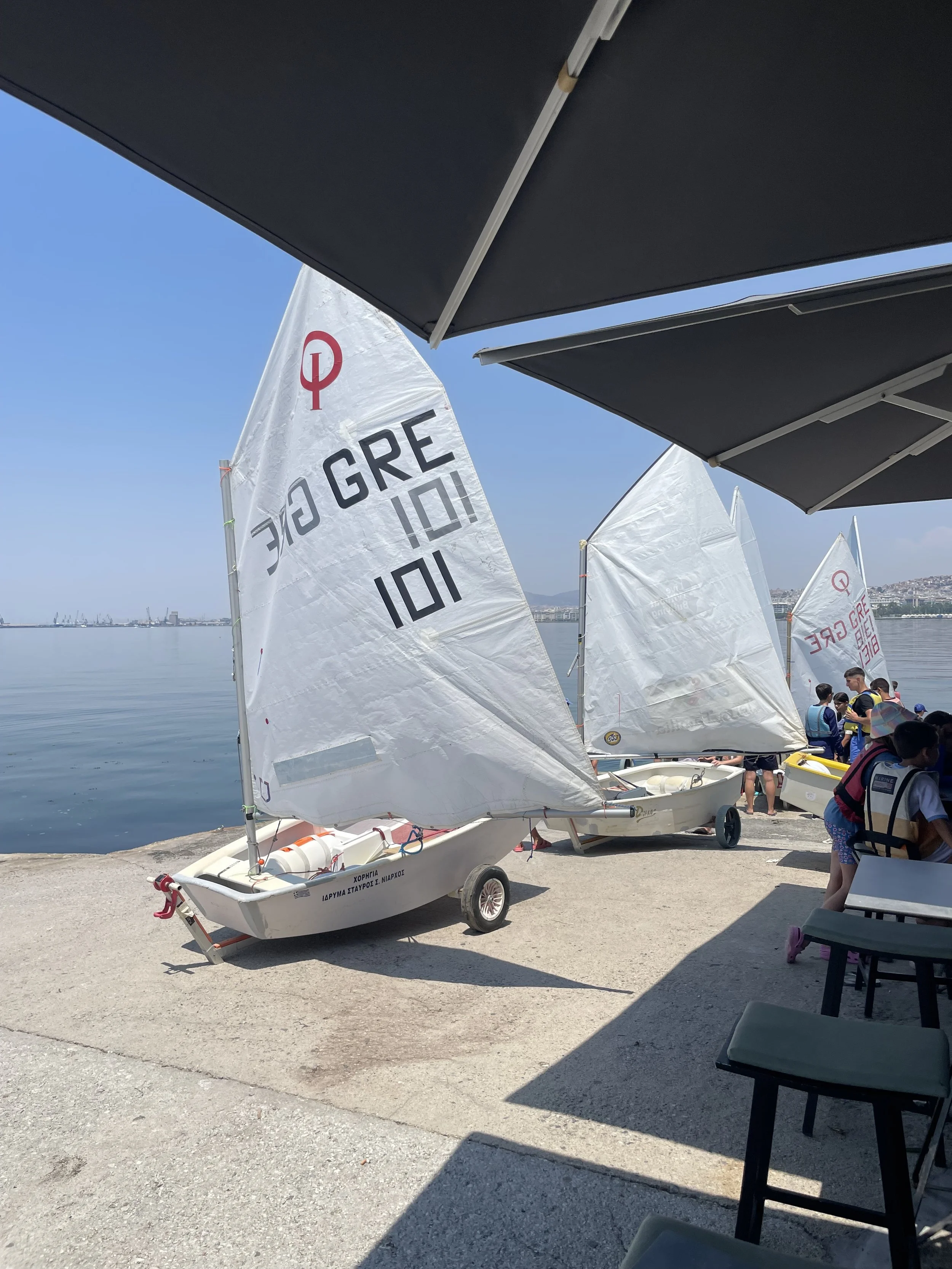
Children learn to sail here.
Greek dancing is communal. Simple patterns. Everyone joins. I’ll share more about that in my mistakes.
Are you willing to look awkward for joy?
Roman Forum & Aristotle Square
Near my hostel, Zeus is Loose, sits the Roman Forum — excavated layers of ancient civic life. Agora. Theatre. Public debate.
Aristotle Square is today’s meeting place — wide, open, social.
This is the social heart of Thessaloniki.
Wide, open, facing the sea — it’s where:
Locals meet friends
Travelers people-watch
Evening strolls begin
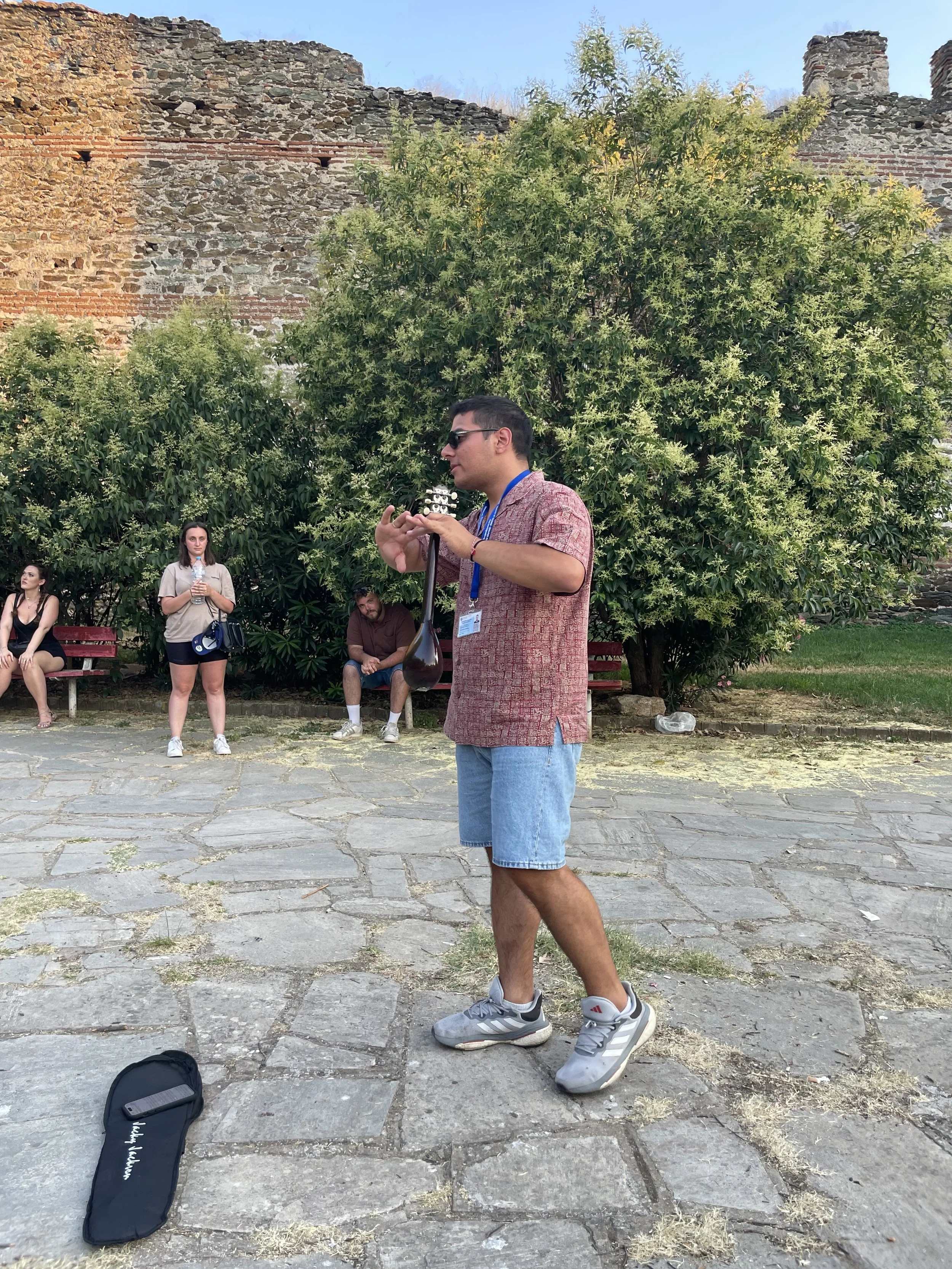
Music in Greece
Grab a coffee, sit under the arcades, and observe. In Greece, public life is not rushed. If you expect efficiency, you’ll be frustrated. If you expect rhythm, you’ll enjoy it.
But the city remembers trauma. wooden homes burned, and with them a large portion of the Jewish quarter. In 1942, Jewish residents were deported to concentration camps, including Auschwitz. A once-thriving community was nearly erased.
Ano Poli survived the Great Fire of 1917, so you’ll see:
Red-roofed traditional houses
Ottoman-era architecture
Stone city walls with sweeping views
Climb in the late afternoon when it’s cooler. The hills are real. Wear solid shoes.
Kapani Market, once near a synagogue — is now a bustling local market. Locals shop here.
The White Tower sits right on the waterfront promenade and offers:
A small museum inside with Thessaloniki’s layered history
An 8-story climb (slow and steady wins)
360-degree views over the sea and city
If you only have one hour in town, this is the postcard moment. Go earlier in the day in summer — the heat builds quickly.
History isn’t distant here. It’s layered under your feet.
Thessaloniki is not flashy like Santorini. It is thoughtful. Complicated. Weathered.
Here’s what you need to know:
Expect slow pacing — culturally and logistically.
Sunday closures are normal.
Nightlife starts late.
English is spoken in tourism, but not everywhere.
History here is heavy — especially Jewish history.
Stay flexible. Plans will shift.